

How to Build a Minimalist Skincare Routine in 2026

Table of Contents
- Why a Minimalist Skincare Routine Beats a 10-Step Regimen
- The Core Essential Skincare Steps for Beginners
- Skincare Layering Rules for Beginners: What Goes First
- How to Simplify Your Skincare Routine Without Sacrificing Results
- Adapting Minimalism for Acne, Rosacea, and Eczema
- Common Mistakes to Avoid When Building Your Routine
- Your 4-Week Plan to Transition Successfully
- Conclusion: Consistency Beats Complexity
- Frequently Asked Questions
Last Updated: September 6, 2026
The average person applies seven products to their face each morning, yet most dermatologists agree that a minimalist routine built on three core steps delivers most visible results. This guide shows which steps matter, what order to apply them in, and how to transition without sacrificing progress.
A minimalist skincare routine is a simplified daily regimen focusing only on products with proven functions: cleansing, treating, and protecting. Fewer products mean less money spent, less time in front of the mirror, and a lower risk of irritating your skin with conflicting active ingredients.
Why a Minimalist Skincare Routine Beats a 10-Step Regimen
Most 10-step routines are built on hope rather than evidence. Each additional product introduces a new variable, and when your skin reacts, you have no idea which one caused it. A minimalist approach eliminates that guesswork.
There is also a financial argument. Complex routines require constant restocking. A simplified regimen with three or four well-chosen products lasts longer, costs less per month, and reduces the temptation to chase every new launch.
The scientific case for simplicity centers on the skin barrier. Overusing active ingredients like retinoids, acids, and vitamin C can strip the barrier, leading to redness, flaking, and sensitivity. According to guidance from the American Academy of Dermatology Association, a simple routine that you follow consistently beats a complicated one you skip half the time.

The Core Essential Skincare Steps for Beginners
The foundation of any minimalist skincare routine rests on three actions: cleanse, treat, and protect. These essential skincare steps for beginners are non-negotiable.
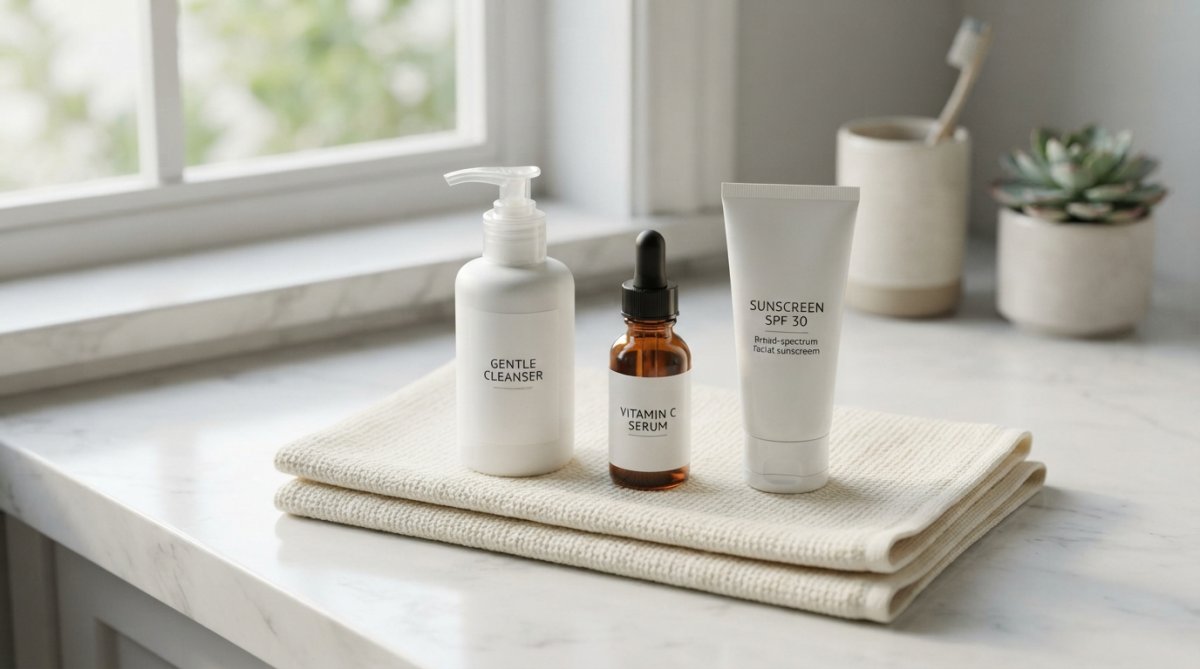
Step 1: Cleanse
Your cleanser removes dirt, oil, and leftover sunscreen from the day. Choose a gentle cleanser that does not leave your skin feeling tight or squeaky clean. Wash once in the evening; in the morning, a splash of water is often enough, especially if your skin leans dry.
Step 2: Treat
This is where you address your specific skin concerns, whether that is dullness, fine lines, or uneven tone. A single well-chosen serum should be the star of your routine. For brightening, our Vitamin C Brightening Serum hydrates while it works on dark spots. For deep moisture, a Hyaluronic Acid Anti-Aging Serum plumps the skin by drawing in water. Pick one concern to tackle first.

Step 3: Protect
Daily sun protection is the single most effective anti-aging step you can take. Sunscreen with broad-spectrum protection shields your skin from the UVA and UVB rays that drive premature aging and hyperpigmentation. Make it a habit every morning, even on cloudy days.
Skincare Layering Rules for Beginners: What Goes First
Skincare layering rules for beginners come down to one principle: apply products from thinnest to thickest consistency so each layer can absorb without being blocked by a heavier formula above it.
The standard sequence after cleansing is simple. Apply your treatment serum first while your skin is still slightly damp. Follow with a moisturizer to seal in hydration. Finish with sunscreen in the morning. If you use an eye cream, apply it after your serum and before your moisturizer.
The Damp-Skin Rule and Absorption
The most underrated variable in layering is skin moisture. Applying a water-based serum to damp skin can increase ingredient penetration, particularly for humectants like hyaluronic acid. However, this same rule works against you with occlusives: applying a heavy balm or oil to damp skin traps water on the surface, which can lead to maceration. Apply your serum within 60 seconds of cleansing, but wait until your skin is fully dry before applying any silicone-based or occlusive moisturizer.
pH and Ingredient Ordering: The Acid-Base Problem
A common mistake is applying multiple active ingredients at once without understanding how they interact. Layering a vitamin C serum and a retinol in the same session can trigger irritation. If you use both, apply vitamin C in the morning and save retinoids for your evening routine.
The mechanism is pH-dependent. Vitamin C (ascorbic acid) is most stable at a pH below 3.5, while retinol works best buffered to a pH of 5.5 to 6.5. Applied together, the acidic vitamin C can destabilize the retinol, reducing efficacy and increasing irritation risk. The same logic applies to exfoliating acids: if you use a glycolic acid toner, wait at least 20 minutes before applying a peptide serum. Keep your routine to one active per session.
The Occlusive Layer: When to Use It and When to Skip It
Moisturizers are not all the same. For layering purposes, the occlusive layer should always come last; applying a petrolatum-based balm before a lighter lotion will block the lotion from absorbing. For oily or acne-prone skin, a gel or lotion moisturizer is often sufficient as the final morning step. For dry or compromised skin, a cream or balm is necessary to prevent transepidermal water loss overnight. Match the occlusivity of your final layer to your skin's actual moisture needs.
The 60-Second Rule Between Actives
If you are layering a serum and a moisturizer, you do not need to wait long. Most dermatologists suggest waiting 60 seconds between water-based layers. The exception is when layering a leave-on exfoliant (like a BHA or AHA) under a moisturizer: wait at least 5 minutes so the acid can penetrate before you seal it in.
How to Simplify Your Skincare Routine Without Sacrificing Results
Transitioning to fewer products does not mean starting from zero. Audit what you already own and categorize each item. Keep your cleanser, primary treatment serum, moisturizer, and sunscreen. Everything else goes into a drawer for a two-week trial period. If you do not miss a product, let it go permanently.
The Cost-Benefit Analysis of Minimalism
When you calculate the cost per use of a product, the value of minimalism becomes obvious. A serum that costs more upfront but delivers visible results can be a better investment than three budget products that each fail to address your concern.
Understanding Product Expiration and Longevity
Most active ingredients degrade once exposed to air and light. Vitamin C is especially unstable, losing potency within months of opening. A minimalist routine helps you finish products before they expire. Check the period-after-opening symbol on your bottles and write the open date on the label.
Adapting Minimalism for Acne, Rosacea, and Eczema
Minimalism is not a one-size-fits-all prescription. For acne-prone skin, the core three steps remain the same, but your treatment step should include a non-comedogenic serum with salicylic acid or niacinamide. Spot treatments, like our Tea Tree Oil Acne Patches, can target blemishes without disrupting the rest of your routine.
For rosacea and eczema, the priority shifts to barrier repair. Fragrance-free products and ceramide-rich moisturizers help restore balance to sensitive skin. Patch testing any new product on your jawline for three to five days is essential before applying it to your full face. A minimalist routine actually supports sensitive skin because fewer products mean fewer potential triggers. According to the National Eczema Association, identifying and avoiding irritants is a cornerstone of managing flare-prone skin.
The Minimalist Framework for Reactive Skin
Most generic routines fail for people with reactive skin because they assume a stable baseline. For acne, rosacea, or eczema, the baseline fluctuates. A true minimalist framework requires a different decision tree: identify your current skin state, choose the single most appropriate intervention, and strip everything else away until the flare resolves.
Acne: The Two-Product Pivot
For active acne breakouts, the minimalist routine should temporarily drop the treatment serum and pivot to a single medicated cleanser or leave-on treatment. Benzoyl peroxide (2.5% to 5%) is the most evidence-backed option for inflammatory acne because it kills Cutibacterium acnes without inducing antibiotic resistance. Salicylic acid (0.5% to 2%) is better for comedonal acne since it is lipid-soluble and can penetrate pores to dissolve blockages. The key is to choose one, not both. Once the flare subsides, reintroduce your normal treatment serum.
Rosacea: The Barrier-First Protocol
Rosacea is not a condition you treat with active ingredients; it is a condition you manage by removing triggers. The minimalist routine for rosacea-prone skin should include a gentle, non-foaming cleanser (look for one without sodium lauryl sulfate), a single barrier-repair moisturizer with ceramides or squalane, and a mineral sunscreen with zinc oxide or titanium dioxide. Chemical UV filters like avobenzone or oxybenzone can trigger flushing in some individuals. The treatment step for rosacea is often prescription-only (such as topical metronidazole or azelaic acid), so over-the-counter serums should be avoided during active flares. Minimalism for rosacea means reducing your routine to just two products during a flare: a barrier moisturizer and a mineral SPF.
Eczema: The Wet-Wrap Alternative
For eczema-prone skin, the core problem is a defective filaggrin protein that compromises the skin barrier, meaning water loss is higher and irritants penetrate more easily. The minimalist routine should focus on a single, rich emollient applied immediately after bathing (within 3 minutes) to lock in moisture. The treatment step is often a topical corticosteroid prescribed by a dermatologist, applied before the moisturizer. A common pattern is to use a ceramide-based cream as your sole moisturizer and skip serums entirely during a flare. If you need extra hydration, a wet-wrap technique, applying a damp cotton layer over the moisturizer for 20 minutes, is more effective than adding another product.
The Patch-Testing Protocol That Actually Works
Patch testing on your jawline for three to five days is standard advice, but it has a flaw: the jawline has a different barrier thickness than the cheeks or eyelids. For high-risk products, test on the inside of your forearm for 7 days, then on the side of your neck for 3 days before applying to your face. This two-stage protocol catches both allergic contact dermatitis (delayed reaction) and irritant contact dermatitis (cumulative reaction). If you have a history of reacting to fragrances, also check for hidden fragrance sources like linalool or limonene, which are common in products labeled "unscented."
Common Mistakes to Avoid When Building Your Routine
The most frequent error is introducing too many new products at once. When your skin breaks out after adding three items in a week, you cannot identify the culprit. Introduce one new product at a time and wait at least two weeks before adding another.
Skipping sunscreen is the second biggest mistake. A routine that includes a high-quality serum but no daily SPF is incomplete. Sun exposure undoes the work of your other products by breaking down collagen and triggering dark spots.
Finally, do not confuse minimalism with neglect. A minimalist routine still requires a moisturizer, even if you have oily skin. Skipping hydration signals your skin to produce more oil to compensate, creating a cycle of congestion.
Your 4-Week Plan to Transition Successfully
Shifting to a minimalist skincare routine works best as a gradual process rather than a cold-turkey purge.
- Week 1: Audit and simplify. Remove all products except your cleanser, moisturizer, and sunscreen. Let your skin adjust to this baseline.
- Week 2: Reintroduce your primary treatment. Add back your most important serum, whether that is vitamin C for brightening or hyaluronic acid for hydration.
- Week 3: Evaluate and adjust. Assess how your skin feels. If you notice dryness, add a richer moisturizer. If breakouts appear, check whether your cleanser is too heavy.
- Week 4: Lock in your routine. By now, your minimalist routine should feel automatic. If your skin is calm and clear, you have found your formula.
Throughout this process, consistency beats complexity. A simple routine performed daily will outperform an elaborate one performed sporadically. Research from Harvard Health Publishing on skin care emphasizes that adhering to a basic regimen of cleansing and moisturizing is more effective for long-term skin health than occasional intensive treatments.
Conclusion: Consistency Beats Complexity
Building a minimalist skincare routine is not about depriving your skin. It is about giving it exactly what it needs and nothing more. The challenge for most people is resisting the urge to add products every time a new concern appears. Trust the process and let your skin tell you what it needs.
Our curated collection of serums, patches, and wellness tools is designed to support a simpler approach to self-care. Explore options like our Collagen Peptide Eye Cream or Gua Sha Facial Massager Set to round out your minimalist regimen. Get started with The Pure Shelf and build a routine that fits your life.

Frequently Asked Questions
How many steps should a minimalist skincare routine have?
A minimalist skincare routine typically has three core steps: cleanse, treat, and protect. This means a gentle cleanser, one active serum tailored to your skin type, and a moisturizer with sun protection factor (SPF) for the morning. You can add a separate moisturizer at night if needed. This streamlined approach focuses on essential skincare steps for beginners and helps maintain a healthy skin barrier without overwhelming your face with too many active ingredients.
Do dermatologists recommend minimalist products?
Yes, many dermatologists recommend a minimalist skincare routine because it reduces the risk of irritation and helps you identify what truly works for your skin. Using fewer, well-chosen products with proven ingredients like hyaluronic acid, ceramides, and antioxidants is often more effective than layering many items. This approach supports skin health, improves consistency, and is easier on your budget. A simple routine focusing on cleansing, moisturizing, and sun protection is a dermatologist-recommended foundation for most skin types.
Which two serums cannot be used together?
In a minimalist routine, you should avoid combining strong active ingredients like retinoids and direct acids, such as salicylic or glycolic acid, in the same application. This combination can disrupt your skin barrier and cause irritation. Similarly, using vitamin C and benzoyl peroxide together can cancel out the benefits of the vitamin C. Instead, use a retinoid at night and a vitamin C serum in the morning, or alternate days. This respects skincare layering rules for beginners and prevents over-exfoliation.
What is the 4-2-4 rule in skincare?
The 4-2-4 rule refers to the ideal cleansing time for a healthy skin barrier. It suggests massaging an oil-based cleanser into dry skin for four minutes, followed by a water-based cleanser for two minutes, and then spending four minutes applying your moisturizer. While this method offers a deep clean, it is not practical for a minimalist routine or for most busy schedules. A thorough one-minute cleanse with a gentle cleanser is sufficient to remove impurities without stripping your skin.
How do I know my skin type for a minimalist routine?
To identify your skin type, wash your face with a gentle cleanser and wait 30 minutes without applying any products. If your skin feels tight and flaky, you likely have dry skin. If it looks shiny, you have oily skin. A combination of both, with oil in the T-zone and dryness on the cheeks, indicates combination skin. If you experience redness or stinging, you may have sensitive skin. Choosing products labeled non-comedogenic and hypoallergenic is a safe starting point for most types.
Can a minimalist skincare routine help with acne and rosacea?
Yes, simplifying your routine can significantly help manage acne and rosacea. These conditions are often aggravated by too many active ingredients and harsh products that damage the skin barrier. A minimalist approach focuses on a gentle cleanser, a targeted treatment like tea tree oil patches for acne, and a soothing moisturizer with ceramides to restore balance. For rosacea, avoid fragrances and alcohol. Always patch test new products and introduce them one at a time to monitor your skin's reaction.
Leave a comment